My new house, circa 1920
It's done. I bought the house.

The narcissistic primarily autobiographical blog of the pseudonymous d.b. echo
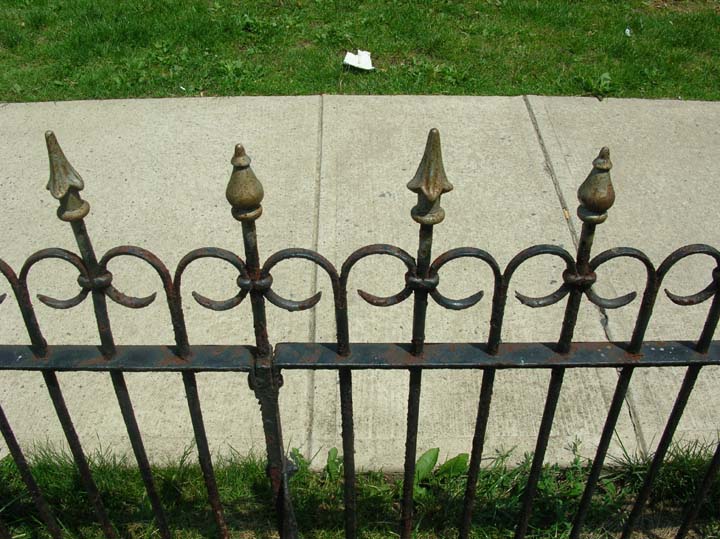 Wrought-iron fence: clean and repaint. This fence is at least 80 years old, possibly older. The last time I know it was painted was back in the Summer of 1979 when my brother and I painted it. (I remember that while I was working on it I was also eagerly awaiting my long-delayed Boba Fett action figure mail-in offer.) It may have been repainted once or twice since then.
 Railings: repaint. The steps and porch really need to be repainted, and are in fact several years overdue. But first the porch needs to have its broken boards replaced.
 Retaining wall under grapevine: repair. Yep, I'll be getting quite a bit of concrete experience this summer. This wall is as wide as the house, but is in sections.
 Walkway between grapevine and house: repair. They call this a trip hazard, I call it character and charm. But, again, this will be a good, low-consequence project for trying out concrete-working techniques. Or I may just dig out the weeds, grass, and moss, clear away any loose bits of broken concrete, sweep in sand, and call it an old-world cobblestone-style walk.
 Item 1: Repair broken boards on front porch. This shouldn't be too hard, and should be a good deal cheaper than replacing the entire porch. The problem is that these boards are tongue-and-groove, aged over 15 years by exposure to the elements (most of that time under a coat of paint). My cousin's boyfriend may be able to help here, or point me to someone who can.
 Item 2: Replace broken window at lower left. This is a double-pane window in the kitchen on the side of the house I will be occupying, the outer pane apparently smashed by a ball of some sort within the past few years. (The inner pane is intact, so the kitchen isn't exposed to the weather and critters.) I really wish my aunt hadn't returned the tenants' security deposit.
 Item 3: replace smashed garage window on right. Again, probably a consequence of ball-playing. Again, something that probably should have been covered by the security deposit.
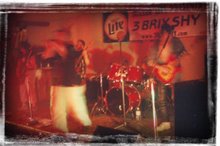
 Left to right:
 Rose, the musician/ philosopher/ veterinarian-in-training/ Dostoevsky fan/ guitarist and vocalist from bands like 3 Brix Shy and Blue Sundaze has opened a site on MySpace! Check it out!
 Royal Highness buds, May 25, 2006
So the answer is the administration -- as the President has said, one of the things that you want to make sure is that when at the end of a path, people who wish to become American citizens are ready for that, that they have a command of the English language.It's unfortunate that a command of the English language isn't a requirement for the Office of the President.
 Me with Haley, May 21, 2005
I must note a few glaring errors made by Francis Slakey in his Comment and Analysis piece "How to kick the habit" ( New Scientist, 13 May 2006, page 21.) He states that Jimmy Carter "endorsed a 55 mph limit when upheaval in the Middle East led to a crisis in the 1970s." This may be technically true in the same sense that Jimmy Carter also endorsed a myriad of other already-existing laws and policies - since the national 55 mph highway speed limit was signed into law by Richard M. Nixon, who was President two places before Carter.
He goes on to say "The public groaned, and then kicked him out of office, along with the policy." While the first part of this statement is true, if overly simplistic, Carter served a full term in office. His unsuccessful re-election bid was the result a combination of factors unrelated to the national speed limit, including the ongoing Iranian hostage situation and an aggressive campaign by the charismatic Ronald Reagan. The national speed limit of 55 mph remained solidly in place for until 1986**, five years after Jimmy Carter left office, and remains in effect to this day on much of the U.S. highway system.Slakey makes yet another error of historical fact: "President Carter achieved this in 1975 by passing a law..." This would have been difficult for President Carter to do in 1975, considering that he was not elected President until November 1976 and was not sworn in until January 1977. And to be pedantic about it, U.S. Presidents do not pass laws. That is the role of Congress.
For any academician to be so sloppy about the easily-verifiable facts of U.S. history is shameful. For these mistakes to be made by a Georgetown professor and co-director of the Program on Science in the Public Interest is even worse. Sadly, such errors only serve to undermine the credibility of his arguments.
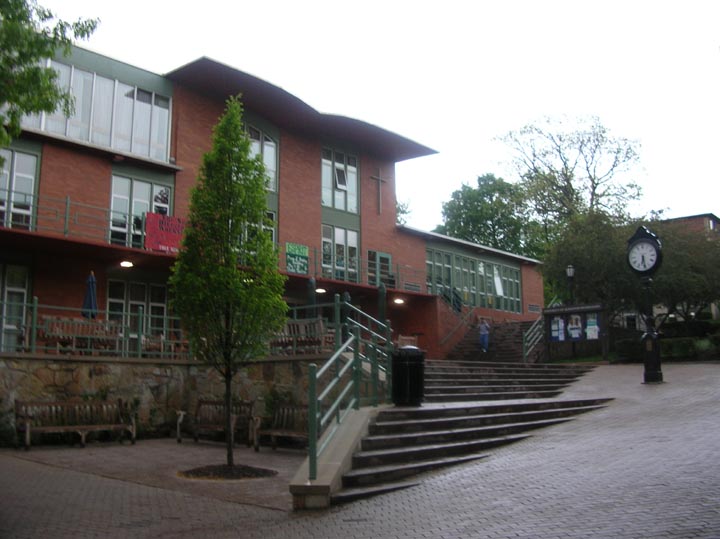 The Gunster Center, a.k.a. the Student Center
 My old mailbox, #741
 The wall of plaques in the Eagen Auditorium
 Curtain and stage at the Eagen Auditorium
 Scranton, looking North
 Elm Park Church
 I've been debating what to wear to tomorrow's SJLA reunion. I sort-of settled on a sport coat, dress shirt, tie, and dress pants. Looks like I made that same decision five years ago, as recorded for posterity in this photo from the 2001 reunion that I took from the SJLA reunion website. (I'm in the front row, next to the woman in red.)


 Posts
All Comments
Posts
All Comments